Nicola Tarzia (R)
Stamford Mayor 2025 Election
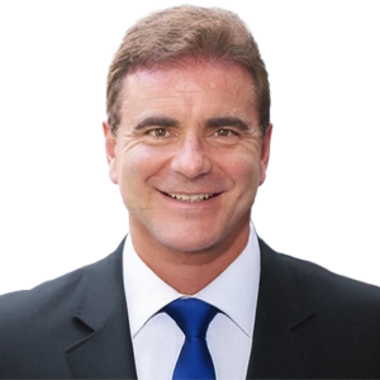
Owner and CEO, The Tarzia Group
I am a lifelong Stamford resident, a business executive, an educator, and a civic leader running for Mayor of Stamford. I am a proud local business owner of The Tarzia Group, a multi-million-dollar company, for over 25 years-- recognized for green energy efficient construction and sustainable building that creates healthier environments for living and working.
I have served more than ten years on the Stamford Board of Education including Vice President and Chair of Operations where I worked to strengthen our schools, support our teachers and ensure fiscal responsibility. My thirty years in community service includes The Stamford Public Education Foundation, The Tarzia Foundation, Stamford Dollars for Scholars and USMC Toys for Tots.
I believe that strong leadership comes from being present, listening, leading with integrity and transparency, and working across party lines to deliver real solutions. My vision for Stamford is clear: Stamford deserves thoughtful and balanced planning for growth that protects affordability and quality of life, preserves our unique neighborhoods, thriving schools and a city government that works for everyone.
I have served more than ten years on the Stamford Board of Education including Vice President and Chair of Operations where I worked to strengthen our schools, support our teachers and ensure fiscal responsibility. My thirty years in community service includes The Stamford Public Education Foundation, The Tarzia Foundation, Stamford Dollars for Scholars and USMC Toys for Tots.
I believe that strong leadership comes from being present, listening, leading with integrity and transparency, and working across party lines to deliver real solutions. My vision for Stamford is clear: Stamford deserves thoughtful and balanced planning for growth that protects affordability and quality of life, preserves our unique neighborhoods, thriving schools and a city government that works for everyone.
Responsible Growth. The Comprehensive Plan has many questionable actions that will be very costly to the taxpayer, e.g. immeasurable density; affordability; and numerous safety issues, which will greatly affect our quality of life. If we do not act more responsibly, everything as we know it will soon change. We cannot let this happen.
Of course, we all want zero injury- but we are doing the opposite through rash approvals without preventative measure. Consider downtown, where multi-modal transportation converges, we need to increase police presence to ensure traffic obedience, manage flow, and timelier accident response on this multi-use, well-travelled central hub.
We will soon see the impact of +1300 units on our Long Ridge corridor and its effects on the neighboring crossroads. We still have six corporate buildings off High Ridge with “as of right” housing conversion, an opportunity for home ownership. How we use these under-utilized properties (and others like it), will be critical to the future mobility for people to get to and from work, shopping and home, so closely to the Merritt thoroughfare.
As Stamford is taking on this exponential growth and subsequent infrastructure demands, our roads have been torn up repeatedly. Respectively, these developers are making a lot of money from much higher rents. We need our land boards to demand more from them. Utility companies also need to be held responsible for quality restoration. Residents should not have to own this consequence or damage. Residents pay enough in taxes that their own road safety and experience should be topline.
Of course, we all want zero injury- but we are doing the opposite through rash approvals without preventative measure. Consider downtown, where multi-modal transportation converges, we need to increase police presence to ensure traffic obedience, manage flow, and timelier accident response on this multi-use, well-travelled central hub.
We will soon see the impact of +1300 units on our Long Ridge corridor and its effects on the neighboring crossroads. We still have six corporate buildings off High Ridge with “as of right” housing conversion, an opportunity for home ownership. How we use these under-utilized properties (and others like it), will be critical to the future mobility for people to get to and from work, shopping and home, so closely to the Merritt thoroughfare.
As Stamford is taking on this exponential growth and subsequent infrastructure demands, our roads have been torn up repeatedly. Respectively, these developers are making a lot of money from much higher rents. We need our land boards to demand more from them. Utility companies also need to be held responsible for quality restoration. Residents should not have to own this consequence or damage. Residents pay enough in taxes that their own road safety and experience should be topline.
With over 7,000 new apartments approved over the past five years, we have neglected to build homes for residents to invest in, e.g. starters or condominiums. There is strong public resistance to any ADU expansion, which would fundamentally change the feel of single-family neighborhoods through dense infill. We should pause and understand the impact of the regulations that were just recently adopted before any elaboration. The point of zoning is to protect quality of life and property values. Stamford has been generous in its rapid growth of apartments. Moving forward, we need to have placement with consideration. We need to ensure that dense housing is planned in thoughtful areas that can support the growth and is safe.
By regulations, all new developments should provide 10-14% BMR's (Below Market Rate Units) or pay a Fee in Lieu which goes into The Affordable Housing Fund. To date, only 1200 BMR units have been built and 500 more planned, in a city of 139,000. Affordability will always be a problem as inflation continues to rise, and landlords raise rents. We need to have full transparency of what is in the trust fund, where it has been used and how it will be used in the future. It is more financially profitable for a developer to pay a fee, and though it would go into this designated fund, it prevents the renter from getting their desired apartment at an affordable cost. We must be an inclusive and equitable city of different economic backgrounds.
By regulations, all new developments should provide 10-14% BMR's (Below Market Rate Units) or pay a Fee in Lieu which goes into The Affordable Housing Fund. To date, only 1200 BMR units have been built and 500 more planned, in a city of 139,000. Affordability will always be a problem as inflation continues to rise, and landlords raise rents. We need to have full transparency of what is in the trust fund, where it has been used and how it will be used in the future. It is more financially profitable for a developer to pay a fee, and though it would go into this designated fund, it prevents the renter from getting their desired apartment at an affordable cost. We must be an inclusive and equitable city of different economic backgrounds.
Stamford once was renowned for being CT’s Corporate Capital with strongholds such as Xerox, GE and Pitney Bowes. Not long ago, our town was revered for “destination shopping” at local favorites Bloomingdales, Saks and Lord & Taylor. Now, our residents must travel on congested highways to White Plains or Norwalk to shop. I want to bring in new industry and retail that provide much needed jobs, supports the residents, and restores local commerce.
I would like to host monthly town hall meetings in each neighborhood to discuss individual needs and get them into responsive action. We need to build trust and make sound decisions that protect and prioritize health, safety and the environment, which are essential for sustainable progress. Finally, we need to ensure transparency: current audits, provide hybrid land use meetings, and easier online access to municipal information for the taxpayer.
How do I see the Future of the City—The Vision? I chose to run for Mayor because Stamford is broken. I have lived here for 62 years and if we don’t act, our beloved Stamford will become something that we no longer recognize. The people that I know may have differences on this or that, but in Stamford, we always came together—and now, that is slowly changing. For years, decades, the city has made decisions based on Special Interests. Decisions made by big money-making entities-- and this will stop with me.
How do I see the Future of the City—The Vision? An inclusive Stamford where residents really do matter.
I would like to host monthly town hall meetings in each neighborhood to discuss individual needs and get them into responsive action. We need to build trust and make sound decisions that protect and prioritize health, safety and the environment, which are essential for sustainable progress. Finally, we need to ensure transparency: current audits, provide hybrid land use meetings, and easier online access to municipal information for the taxpayer.
How do I see the Future of the City—The Vision? I chose to run for Mayor because Stamford is broken. I have lived here for 62 years and if we don’t act, our beloved Stamford will become something that we no longer recognize. The people that I know may have differences on this or that, but in Stamford, we always came together—and now, that is slowly changing. For years, decades, the city has made decisions based on Special Interests. Decisions made by big money-making entities-- and this will stop with me.
How do I see the Future of the City—The Vision? An inclusive Stamford where residents really do matter.